It should be medically obvious but needs to be stated that if you suffer from a bleeding disorder, are already on blood thinners, taking daily aspirin, warfarin, and/or a combination of other drugs and antihypertensives, DO NOT add Nattokinase to your regimen without consulting a medical expert. Nattokinase, if self-administered, can under certain circumstances, and in conjunction with other medications, lead to life threatening conditions. Always check with a qualified doctor.
Authors note: New research questioning the efficacy of Nattokinase to break up Amyloidogenic clots was brought to my attention by Kevin McKearn Ph.d. Studies referenced in the section on Blood Clotting. Also brought to my attention, of concern is sequestration after disassociation of the clots that are destroyed, where the bits end up, potentially lodging in the liver, kidneys and spleen, which I have now also addressed under side effects.
So does Nattokinase pose a threat to conventional pharmaceutics? It is the latest poster child for the wellness sector, touted to deliver astounding results, thinning your blood, dropping LDL levels (that’s your bad cholesterol) while increasing HDL levels (the good stuff). Of more importance, and probably why you’re reading this is the products latest claim to fame.
It claims to dissolve micro clots stemming from the vaccine spike in Covid mRNA vaccines, and potentially from the virus itself. That is quiet a claim, but does the science support it? Luckily, unlike most supplements or health products (with the exception of certain vitamins) there is extensive medical research on the product, which will help us to address all of the current claims.
That’s what this article intends to discover, and it isn’t merely based on science, but on personal experience. I decided to trial the product prior to writing the article and I’ve been using it for nearly two months. My own personal observations (for what they are worth) are included in the footer. Let’s start by identifying exactly what Nattokinase is.
Nattokinase is a serine protease enzyme extracted and purified from natto, a traditional Japanese food made from fermented soybeans. Natto is produced by fermenting boiled soybeans with the bacterium Bacillus subtilis (specifically the natto strain), which generates the enzyme during the process. So yes, it is completely natural.
It is known for its potent fibrinolytic properties, meaning it can break down fibrin, a protein involved in blood clot formation, potentially acting as a natural blood thinner or antithrombotic agent1.
Nattokinase originates from natto, a fermented soybean dish that has been a staple in Japanese cuisine for over a thousand years, with historical references dating back to at least the 8th century in Japan. The enzyme is produced naturally during the fermentation process when Bacillus subtilis natto bacteria act on the soybeans, creating the characteristic sticky, stringy texture of natto where nattokinase is concentrated.
This fermentation tradition likely began in northeastern Japan, with legends suggesting it was discovered accidentally around 1051–1083 CE, possibly when soybeans were wrapped in rice straw and fermented unintentionally. Natto’s origins may trace even further to similar fermented bean products in ancient China or Korea, but its modern form and the isolation of nattokinase are distinctly Japanese.
You can skip over this section unless you’re writing a dissertation, or, like me, you’re just plain nosy. The history of nattokinase is tied to natto’s long-standing role as a health food in Japan. Natto has been consumed for centuries, valued for its nutritional benefits, but the specific enzyme wasn’t identified until modern scientific research.
Early Recognition of Natto’s Properties: In 1907, protease enzyme activity was first noted in natto. By 1925, Dr. Oshima at Hokkaido University reported purifying and characterizing enzymes from natto2.
Discovery of Nattokinase: In 1980, Japanese researcher Dr. Hiroyuki Sumi, working at the University of Chicago Medical School, accidentally discovered nattokinase’s fibrin-dissolving ability while testing natto on artificial fibrin clots in a petri dish. He observed that natto caused the clots to dissolve rapidly, leading to further isolation and study3. The enzyme was formally named “nattokinase” in the 1980s, with key publications in 1987 describing its purification and strong fibrinolytic activity.
Modern Developments: Since the 1990s, nattokinase has been researched extensively in Japan and internationally for its potential therapeutic uses. It became available as a supplement, often marketed under names like NSK-SD®. Studies have explored its oral bioavailability, with evidence suggesting it can survive digestion and exert effects in the bloodstream. By the 2000s, it had gained popularity in natural health circles for cardiovascular support. Important to note that regulatory bodies like the FDA still classify it as a supplement, not a drug.
Read this before you dive in. You can be certain, particularly in the wellness and health sectors, that if a product shows real potential benefits that are scientifically validated, which Nattokinase does, grifters are going to double down on the claims. Beware the medical practitioner or health expert that knocks on your door bearing “gifts” you need to pay for.. Something most people, often desperate, fail to grasp, is that if a product is so wonderful, it wouldn’t require the owner to peddle it at every opportunity, often to the detriment of the buyer.
There are Nattokinase derived products or biosimilars out there that feed off this, claiming wonderous results with little to no real world science and evidence based data to back their claims. Augmented NAC, is one of these and if there is a “protocol” to follow, sniff the air aggressively.
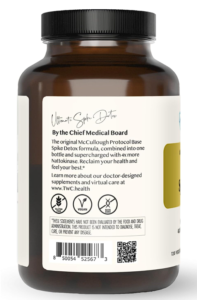
Claiming one thing on the product name, and then adding the disclaimer that it cannot do this, is in and of itself, misleading. A little like selling you “Best Motor Oil Ever” and then telling you you probably shouldn’t put it in your cars engine. Take the “Ultimate Spike Detox:, loaded with Nattokinase, and questionable recommended daily dosages that retails at over $80?? Where is the evidence to back the product name? Regulation of Nattokinase would put an end to its opportunistic exploitation..
More on this in the section on microclots and in a follow up article.
Yes. It definitely stands up to scrutiny on this claim. The antithrombotic properties, amongst others, of Nattokinase are widely recognized through the scientific literature. Not only does it impact fibrin in the blood, it was recently demonstrated to effectively reduce nasal polyp tissue through fibrin degradation4 indicating its potential in the treatment of chronic rhinosinusitis.
Cardiovascular disease (CVD) is the leading cause of death in the world and our approach to the control and management of CVD mortality is limited. Nattokinase (NK), the most active ingredient of natto, possesses a variety of favourable cardiovascular effects and the consumption of Natto has been linked to a reduction in CVD mortality. Recent research has demonstrated that NK has potent fibrinolytic activity, antihypertensive, anti-atherosclerotic, and lipid-lowering, antiplatelet, and neuroprotective effects.
Nattokinase: A Promising Alternative in Prevention and Treatment of Cardiovascular Diseases. Chen et,al DOI: 10.1177/1177271918785130
As the study above correctly points out, nattokinase could offer a promising alternative for those who suffer from high blood pressure, as side effects of the long term use of conventional antihypertensive drugs are not insignificant. Of particular benefit, would be patients with CVD. Nattokinase is extremely well tolerated by the body, even at high dosages, with very few recorded adverse events or side effects, most of which appear to be drug related interactions (aspirin, warfarin, etc).
In a recent clinical study conducted in our laboratory, daily NK supplementation was an effective way to suppress the progression of atherosclerosis in patients with atherosclerotic plaques. Following NK treatment for 26 weeks, there was a significant reduction in CCA intima-media thickness (CCA-IMT) and carotid plaque size when compared with the baseline before treatment. The carotid plaque size and CCA-IMT reduced from 0.25 ± 0.12 cm2 to 0.16 ± 0.10 cm2 and from 1.13 ± 0.12 mm to 1.01 ± 0.11 mm, respectively.
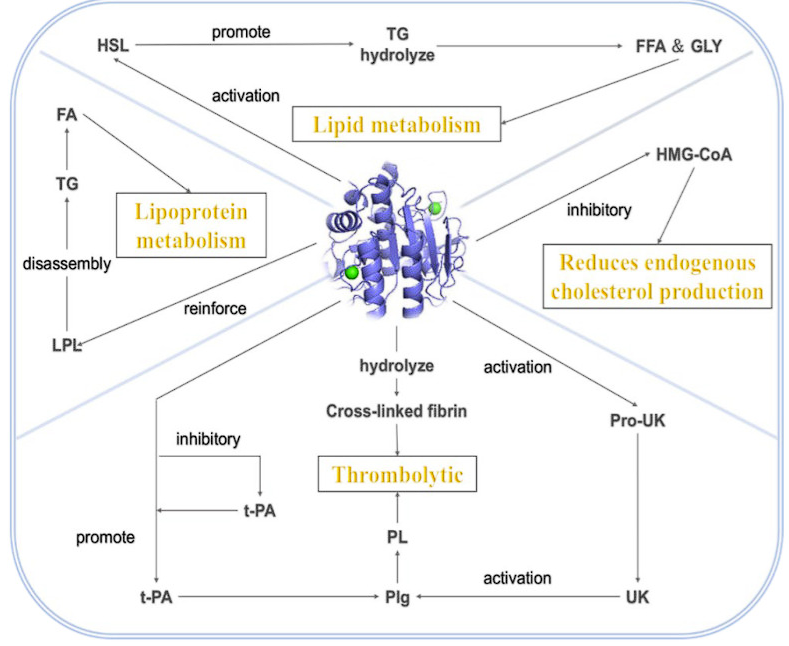
Again, we have to go with a resounding yes. Studies indicate that it has a considerable impact on lipids,the diagram below provides a clearer idea of the actual processes at play.
The quote below is drawn directly from the abstract of a paper entitled, Research Progress of Nattokinase in Reducing Blood Lipids and I would highly recommend reading it. You can access a full free to read version of the paper here.
“exerts lipid-lowering and anti-atherosclerotic effects by activating hormone-sensitive lipase (HSL), inhibiting hydroxymethylglutaryl monoacyl coenzyme A reductase (HMG-CoA reductase), and enhancing lipoprotein lipase (LPL) activity. Large-scale clinical trials have confirmed that nattokinase significantly improves the lipid profile and reduces the atherosclerotic plaque area and intima-media thickness with a favorable safety profile. Compared with traditional lipid-lowering drugs (e.g., statins and fibrates), nattokinase has a multifaceted lipid-lowering mechanism and lower risk of side effects, which makes it suitable for patients intolerant of traditional drugs”
Research Progress of Nattokinase in Reducing Blood Lipid: DOI: 10.3390/nu17111784
Real world results, in a trial quoted from the same paper;
“In an 8-week trial enrolling 60 patients with primary hyperlipidemia, subjects were randomized into an experimental and a control group, with the experimental group receiving a daily preparation containing NK 2000 FU and the control group given a placebo. After a 56-day intervention, there were significant mean absolute changes in the total cholesterol (TC), low-density cholesterol (LDL-C), non-high-density cholesterol (non-HDL-C), and low-density cholesterol to high-density cholesterol ratio (LDL-C to HDL-C ratio), with values of −0.52 (95% CI: −0.51 to −0.54) mmol/L, −0.43 (95% CI: −0.45 to −0.41) mmol/L, −0.52 (95% CI: −0.52 to −0.52) mmol/L, and −0.29 (95% CI: −0.30 to −0.28) mmol/L, respectively, between the two groups. The results showed that serum total cholesterol (TC) levels in the experimental group were reduced by an average of about 10%, triglycerides (TGs) were reduced by about 12%, low-density lipoprotein cholesterol (LDL-C) was reduced by about 11%, and high-density lipoprotein cholesterol (HDL-C) was elevated by about 8% (p < 0.05, and the difference was statistically significant; in the control group, there was no significant change in the lipid indices) “
A study published in Frontiers in Cardiovascular Medicine5 is highly representative of the study above. It retrospectively analyzed the data of 1062 participants between 2016 and 2020, who took a Nattokinase preparation product approved by China’s National Medicinal Products Administration (NMPA). Participants took the approved Nattokinase preparation at a single dose of 3600 FU three times a day for a total of 10,800 FU/day for 12 months, with regular testing of blood lipids and carotid ultrasound.
No obvious adverse reaction were recorded for the duration of the trial and efficacy was equal for men and women enrolled in the trial.
The results of the study are impressive, resulting in atherosclerotic plaque patients with a 21.7% reduction in the thickness of the inner intima-media, with an effective rate of 77.7%, and a 36.0% reduction in the area of plaque, with an effective rate of 66.5%, indicating that NK can effectively inhibit the progression of atherosclerosis. After 12 months of daily NK consumption at a dose of 10,800 FU, a significant reduction in TG, TC, and LDL-C (p < 0.01) was evident compared to the values before treatment. Furthermore, NK also had the effect of increasing HDL-C (15.8% increase, p < 0.01). The levels of TC, TG, LDL-C, and HDL-C improved in 95.4, 85.2, 84.3, and 89.1% of the participants, respectively, after 12 months of NK use. NK administration for 12 months led to a decrease of 15.9, 15.3, and 18.1% in TC, TG, and LDL-C, respectively. In terms of lipid regulation, total cholesterol in hyperlipidemic patients was reduced by 15.9%, with an effective rate of 95.4%; tri-glycerides were reduced by 15.7%, with an effective rate of 85.2%; LDL cholesterol was reduced by 18.1%, with an effective rate of 84.3%; and HDL cholesterol was increased by 15.8%, with an effective rate of 89.1%, which comprehensively improved the lipid profile.
Research Progress of Nattokinase in Reducing Blood Lipid: DOI: 10.3390/nu17111784
These are significant results and are mirrored in other trials, some of which you will find listed at the end of the article. It should be noted that the recommended daily dosage of 2500 FU. recommended by the health sector shows only minor improvements in LDL, HDL and TC. Dosages at 6500 FU and higher seem to hit the sweet spot and are safely tolerated in most individuals.
Without further ado then, onto our last, and possibly most audacious claim surrounding Nattokinase.
So, first of all, what do we know about the Covid’s spike protein (Vaccine and virus based) and its ability to induce microclots in your blood? The spike protein can promote abnormal clotting by inducing resistant fibrin structures (fibrinaloids or microclots) that impair blood flow and oxygenation.
Now I know half the world is going to yell foul and claim this doesn’t happen, so to cut that conversation short, here is a list of papers validating the formation of microclots. Just click on the DOI number or google the titles. There are more out there, if you are inclined to search.
Now the cowboys have been cut off at the pass, lets deal with the claim. As we’ve seen from countless papers, Nattokinase almost exists for the sole purpose of breaking down clots, and while the mechanisms for creating the wave of microclots everyone exposed to mRNA and the virus now find themselves facing may be unique, these are still clots, there is still fibrin involved, so logic would seem to dictate that it would indeed help break these down.
Let’s see what the early and still limited science says on this.
A study just published in the Journal of Experimental and Clinical Application of Chinese Medicine entitled Automated microscopic measurement of fibrinaloid microclots and their degradation by nattokinase, the main natto protease, Grixti et.al shows that Nattokinase is indeed effective in destroying the clots. While the paper based its results on in vitro testing (outside the human body) it is confirmation of anecdotal reports on the efficacy of the product. You can read the full paper here.
“This has allowed us, for the first time, to conclude at least three important features: (i) the formation kinetics of fibrin amyloid microclots in whole samples may be imaged noninvasively in an automated manner, (ii) such microclots can aggregate over time, and (iii) the fibrinaloid microclots may be degraded by nattokinase. This latter has significant therapeutic implications for those suffering from Long COVID and related disorders, as NK preparations are widely available commercially.”
Conclusion from Automated microscopic measurement of fibrinaloid microclots and their degradation by nattokinase, the main natto protease, Grixti et.al
Below is another list of recent papers exploring the topic, which you can browse through in your own time. The general consensus is, yes, there is indeed value in pursuing Nattokinase as a treatment for microclots, amongst other benefits.
Well, given the well established safety profile of the product and its proven ability to reduce clotting, thin blood, drop LDL levels, elevate HDL and have a direct impact on your TC, why wouldn’t you take the product, medical and pharmaceutical restraints aside? Well, there may be issues with the product after all, or perhaps more correctly phrased, it has overreached its benefits. It would appear from the most recent papers that it is not that great at breaking up amyloidogenic clots.
The persistence of microvascular symptoms in post-infectious syndromes such as Long COVID has increased the interest in the role of amyloid-like fibrin structures known as fibrinaloid microclots. These aggregates are characterized by β-sheet–rich fibrin(ogen) conformations and are reported to be resistant to conventional enzymatic fibrinolysis
Investigation of the synergistic effect of enzymatic and Ultrasound Induced amyloid microclot degradation, Rasouli et.al 10.1007/s11239-025-03220-0
and, echoing this opinion, a few more papers.
Important to note, that while research seems to point at a limited efficacy in breaking up amyloidogenic clots, there is still a measurable, if small, impact. So not the miracle hoover we had all hoped for, rather a light dusting effect. As with all these products (pharmaceuticals included) do your own research and do it diligently. One body, one go around the mouse wheel.
I’ve dealt with a few of the known side effect below so you can make an informed judgement on suitability and then, as always, there are two last important considerations. Quality. This matters when it comes to unregulated products, and of course, input from a qualified medical professional.
Firstly, not all Nattokinase is created equal. I purchased mine from a Japanese company for a number of reasons. They are more strictly regulated and their quality and packing is unsurpassed. Also, it makes sense going to the home of the product. Expect to pay around $15 for a months supply of 6500FU (12000FU also available) tablets, 30 capsules in total. Japanese manufacturers also tend to remove the odour from the product, which can be off putting for some.
Look for vegetable based, acid resistant capsules, that can survive your stomach and make it to your small intestine for better absorption. There are also a few other things you should watch out for. Low quality product may contain traces of heavy metals, purines and Vit. K2. The purines will raise your uric acid (and risk of gout), the K2 will impact blood clotting and reduce the products efficacy and then of course, no odor. Trust me on that point. Ain’t pleasant.
That’s the million dollar question and the truth is, no one can definitely answer this. Reports in the medical literature are sparse and often confounded by the patients involved taking multiple medications. I’ve noted a few below, which may be outliers, or simply isolated cases/interactions for a product that is not widely used. It’s important to note that most literature indicate an excellent tolerance in patients, even at relatively high dosages.
One thing of concern and not considered or dealt with in much detail here is where the debris from your clot busting product ends up, how and where it accumulates and how your body breaks it down, the sequestration after disassociation of the clots. The debris from the clots, or perhaps even the clot itself, dislodged by the MOA of the Nattokinase, needs to go somewhere and your body is a closed system. This can potentially lead to injury and other complications and while the risk is minimal, it remains an undocumented side effect. We have commissioned an article on this, and a link will be placed here after it is published.
And here we are dear reader, at the end of our deep dive. If you’re still around, thank you for reading all the way through. I mentioned at the start of the article that I would offer my five cents on the product, having used it now for two months. I’ve yet to have my bloodwork done, was going to leave that till month 3 and will add the results below.
I am 60, and the taking the product seemed to make sense. Anything at my age that can reduce the risk of stroke, clots and drop my bad cholesterol I am firmly onboard with. Not sure if it can drain all the beer from my blood, but we live in hope. I never vaccinated against Covid, wild horses wouldn’t have gotten me with ten yards of a vaccine and of course, being in Asia, we were mostly spared mRNA, with the likes of J&J and the Chinese Sinovac being the order of the day.
To be clear, I am not on any other medication and do not suffer from any bleeding disorders. I am, touch wood, exceptionally healthy with a BP of 120/80. So why the interest in Nattokinase then. Call it prevention, in lieu of a better word, given that my faith in cure is all but gone, post Covid.
I didn’t notice anything dramatic the first month on the product, however halfway into my second month, I became aware of certain changes, breathing easier, and just a general sense of increased wellbeing. We find it very difficult to identify slow incremental changes in our lives, they tend to sneak up on us. Is the Nattokinase responsible? Perhaps. I do however intend to continue taking it. Hedging my bets!
The studies listed below are peer reviewed papers on the topic of microclots. The formation…
You may still be under the impression that safety trials for vaccines end with phase…
Although it might have been quiet on this substack for a few weeks there has…
The studies listed below are peer reviewed papers on the topic of Long Covid, LPCVS…
The studies listed below are peer reviewed papers on the topic of the impact of…
The studies listed below are peer reviewed papers on the topic of mRNA vaccines, the…
This website uses cookies.