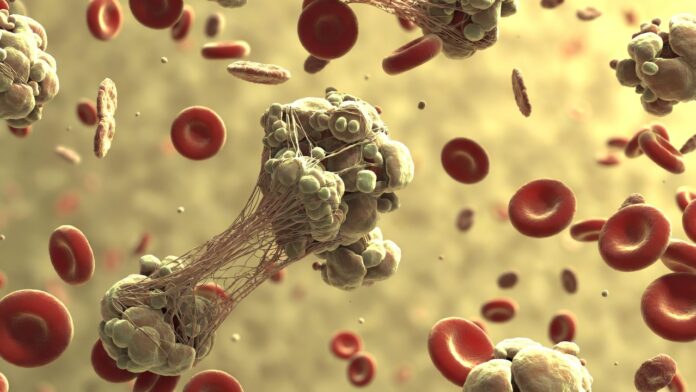
The studies listed below are peer reviewed papers on the topic of microclots. The formation of amyloidogenic clots (commonly referred to as “fibrinaloid microclots) in the body post exposure to the SARS-COV 2 spike protein are now well documented. Please check back from time to time as this list is expanded with the release of new papers.
How to use this page
Papers are listed by date, the most recent appearing at the top of the page. Click to expand for a full text link, author details, correspondence and abstract. Where a paper is published in multiple journals, the link provided is to a full text version. If we have missed important validated research, please log in and use the comment box below to send us a link. Acceptance of submitted links is at the discretion of the editors.
Please note that on occasion, a retracted study will still be listed. This is an editorial decision, based on the reasons for the papers retraction. Clear attempts to discredit research with a view to censorship does not warrant retraction. These papers are highlighted in red and where possible PDF versions exist on our servers.

Investigation of the synergistic effect of enzymatic and Ultrasound Induced amyloid microclot degradation
Study Details
| FULL TEXT LINK: View Paper (PDF) |
| PUBLICATION DATE: September, 2025 |
| PUBLICATION: Springer Nature, Journal of Thrombosis and Thrombolysis |
| AUTHORS |
| Reza Rasouli, Brad Hartl, Soren D Konecky |
| CORRESPONDENCE TO |
| [email protected] |
| DOI: 10.1007/s11239-025-03220-0 |
| PMID: 41405757 |
| ABSTRACT |
| Amyloid microclots have been implicated in thrombotic complications across various pathological conditions such as Long COVID symptoms, yet their resistance to enzymatic fibrinolysis causes a therapeutic challenge. In this study we examine the effects of three fibrinolytic enzymes rtPA, Lumbrokinase, and Nattokinase on plasma-derived amyloid microclots, in combination with ultrasound-induced microstreaming and microbubbles. A lab-on-chip platform was used to expose the clots to ultrasound at 150, 300, and 500 kHz. Quantitative analysis revealed that ultrasound alone significantly disrupted clot structures, particularly at 150 kHz, where mean clot diameter was reduced by over 60% and large-clot count (> 30 μm) dropped by more than 80% compared to controls. The addition of fibrinolytic enzymes, however, did not produce statistically significant effects at 150-300 kHz which indicates that mechanical forces were the dominant contributors to clot disruption. At 500 kHz, where ultrasound alone was less effective, enzymatic treatment moderately enhanced the reduction in large-clot burden. These results show the potential of low-frequency ultrasound as a primary method of amyloid microclot breakdown, with enzyme co-treatment offering limited but measurable effect. |
Increased fibrinoid microclot counts in platelet-poor plasma are associated with Long COVID
Study Details
| FULL TEXT LINK: View Paper |
| PREPRINT DATE: April, 2024 |
| PUBLICATION: medRxiv |
| AUTHORS |
| Caroline F. Dalton, Madalena IR de Oliveira, Prachi Stafford, Nicholas Peake, Binita Kane, Andrew Higham, Dave Singh, Natalie Jackson, Helen E. Davies, David A. Price, Rae Duncan, Nicola Tattersall, Amanda Barnes, David P. Smith |
| CORRESPONDENCE TO |
| [email protected] |
| DOI: 10.1101/2024.04.04.24305318 |
| PMID: Not indexed |
| ABSTRACT |
| The prevailing hypotheses for the persistent symptoms of Long COVID have been narrowed down to immune dysregulation and autoantibodies, widespread organ damage, viral persistence, and fibrinaloid microclots (entrapping numerous inflammatory molecules) together with platelet hyperactivation. Here we demonstrate significantly increased concentrations of Von Willebrand Factor, platelet factor 4,serum amyloid A, α-2antiplasmin E-selectin, and platelet endothelial cell adhesion molecule-1, in the soluble part of the blood. It was noteworthy that the mean level of α-2-antiplasmin exceeded the upper limit of the laboratory reference range in Long COVID patients, and the other 5 were significantly elevated in Long COVID patients as compared to the controls. This is alarming if we take into consideration that a significant amount of the total burden of these inflammatory molecules has previously been shown to be entrapped inside fibrinolysis-resistant microclots (thus decreasing the apparent level of the soluble molecules). We also determined that by individually adding E-selectin and PECAM-1 to healthy blood, these molecules may indeed be involved in protein-protein interactions with plasma proteins (contributing to microclot formation) and platelet hyperactivation. This investigation was performed as a laboratory model investigation and the final exposure concentration of these molecules was chosen to mimic concentrations found in Long COVID. We conclude that presence of microclotting, together with relatively high levels of six inflammatory molecules known to be key drivers of endothelial and clotting pathology, points to thrombotic endotheliitis as a key pathological process in Long COVID. This has implications for the choice of appropriate therapeutic options in Long COVID. |
Persistent hypofibrinolysis in severe COVID-19 associated with elevated fibrinolysis inhibitors activity
Study Details
| FULL TEXT LINK: View Paper (Subscription required) |
| PUBLICATION DATE: March, 2024 |
| PUBLICATION: Springer |
| AUTHORS |
| Erica Okazaki, Bárbara Gomes Barion, Tania Rubia Flores da Rocha, Giovanna Di Giacomo, Yeh-Li Ho, Cynthia Rothschild, Giancarlo Fatobene, Bruna del Guerra de Carvalho Moraes, Bianca Stefanello, Paula Ribeiro Villaça, Vanderson Geraldo Rocha, Fernanda Andrade Orsi |
| CORRESPONDENCE TO |
| [email protected] |
| DOI: 10.1007/s11239-024-02961-8 |
| PMID: 38523179 |
| ABSTRACT |
| Hypercoagulability and reduced fibrinolysis are well-established complications associated with COVID-19. However, the timelines for the onset and resolution of these complications remain unclear. The aim of this study was to evaluate, in a cohort of COVID-19 patients, changes in coagulation and fibrinolytic activity through ROTEM assay at different time points during the initial 30 days following the onset of symptoms in both mild and severe cases. Blood samples were collected at five intervals after symptoms onset: 6–10 days, 11–15 days, 16–20 days, 21–25 days, and 26–30 days. In addition, fibrinogen, plasminogen, PAI-1, and alpha 2-antiplasmin activities were determined. Out of 85 participants, 71% had mild COVID-19. Twenty uninfected individuals were evaluated as controls. ROTEM parameters showed a hypercoagulable state among mild COVID-19 patients beginning in the second week of symptoms onset, with a trend towards reversal after the third week of symptoms. In severe COVID-19 cases, hypercoagulability was observed since the first few days of symptoms, with a tendency towards reversal after the fourth week of symptoms onset. A hypofibrinolytic state was identified in severe COVID-19 patients from early stages and persisted even after 30 days of symptoms. Elevated activity of PAI-1 and alpha 2-antiplasmin was also detected in severe COVID-19 patients. In conclusion, both mild and severe cases of COVID-19 exhibited transient hypercoagulability, reverted by the end of the first month. However, severe COVID-19 cases sustain hypofibrinolysis throughout the course of the disease, which is associated with elevated activity of fibrinolysis inhibitors. Persistent hypofibrinolysis could contribute to long COVID-19 manifestations. |
Increased levels of inflammatory molecules in blood of Long COVID patients point to thrombotic endotheliitis
Study Details
| FULL TEXT LINK: View Paper |
| PREPRINT DATE: June, 2022 |
| PUBLICATION: medRxiv |
| AUTHORS |
| Simone Turner, Caitlin A Naidoo, Thomas J Usher, Arneaux Kruger, Chantelle Venter, Gert Jacobus Laubscher, M Asad Khan, Douglas B Kell, Etheresia Pretorius |
| CORRESPONDENCE TO |
| [email protected] |
| DOI: 10.1101/2022.10.13.22281055 |
| PMID: Not indexed |
| ABSTRACT |
| The prevailing hypotheses for the persistent symptoms of Long COVID have been narrowed down to immune dysregulation and autoantibodies, widespread organ damage, viral persistence, and fibrinaloid microclots (entrapping numerous inflammatory molecules) together with platelet hyperactivation. Here we demonstrate significantly increased concentrations of Von Willebrand Factor, platelet factor 4,serum amyloid A, α-2antiplasmin E-selectin, and platelet endothelial cell adhesion molecule-1, in the soluble part of the blood. It was noteworthy that the mean level of α-2-antiplasmin exceeded the upper limit of the laboratory reference range in Long COVID patients, and the other 5 were significantly elevated in Long COVID patients as compared to the controls. This is alarming if we take into consideration that a significant amount of the total burden of these inflammatory molecules has previously been shown to be entrapped inside fibrinolysis-resistant microclots (thus decreasing the apparent level of the soluble molecules). We also determined that by individually adding E-selectin and PECAM-1 to healthy blood, these molecules may indeed be involved in protein-protein interactions with plasma proteins (contributing to microclot formation) and platelet hyperactivation. This investigation was performed as a laboratory model investigation and the final exposure concentration of these molecules was chosen to mimic concentrations found in Long COVID. We conclude that presence of microclotting, together with relatively high levels of six inflammatory molecules known to be key drivers of endothelial and clotting pathology, points to thrombotic endotheliitis as a key pathological process in Long COVID. This has implications for the choice of appropriate therapeutic options in Long COVID. |
A central role for amyloid fibrin microclots in long COVID/PASC: origins and therapeutic implications
Study Details
| FULL TEXT LINK: View Paper |
| PUBLICATION DATE: February, 2022 |
| PUBLICATION: Portland Press, Biochemical Journal |
| AUTHORS |
| Douglas B. Kell, Gert Jacobus Laubscher; Etheresia Pretorius |
| CORRESPONDENCE TO |
| [email protected] |
| DOI: 10.1042/BCJ20220016 |
| PMID: 35195253 |
| ABSTRACT |
| TPost-acute sequelae of COVID (PASC), usually referred to as ‘Long COVID’ (a phenotype of COVID-19), is a relatively frequent consequence of SARS-CoV-2 infection, in which symptoms such as breathlessness, fatigue, ‘brain fog’, tissue damage, inflammation, and coagulopathies (dysfunctions of the blood coagulation system) persist long after the initial infection. It bears similarities to other post-viral syndromes, and to myalgic encephalomyelitis/chronic fatigue syndrome (ME/CFS). Many regulatory health bodies still do not recognize this syndrome as a separate disease entity, and refer to it under the broad terminology of ‘COVID’, although its demographics are quite different from those of acute COVID-19. A few years ago, we discovered that fibrinogen in blood can clot into an anomalous ‘amyloid’ form of fibrin that (like other β-rich amyloids and prions) is relatively resistant to proteolysis (fibrinolysis). The result, as is strongly manifested in platelet-poor plasma (PPP) of individuals with Long COVID, is extensive fibrin amyloid microclots that can persist, can entrap other proteins, and that may lead to the production of various autoantibodies. These microclots are more-or-less easily measured in PPP with the stain thioflavin T and a simple fluorescence microscope. Although the symptoms of Long COVID are multifarious, we here argue that the ability of these fibrin amyloid microclots (fibrinaloids) to block up capillaries, and thus to limit the passage of red blood cells and hence O2 exchange, can actually underpin the majority of these symptoms. Consistent with this, in a preliminary report, it has been shown that suitable and closely monitored ‘triple’ anticoagulant therapy that leads to the removal of the microclots also removes the other symptoms. Fibrin amyloid microclots represent a novel and potentially important target for both the understanding and treatment of Long COVID and related disorders. |
SARS-CoV-2 spike protein S1 induces fibrin(ogen) resistant to fibrinolysis: Implications for microclot formation in COVID-19
Study Details
| FULL TEXT LINK: View Paper |
| PUBLICATION DATE: August, 2021 |
| PUBLICATION: BIOSCIENCE Reports |
| AUTHORS |
| Lize M. Grobbelaar, Chantelle Venter, Mare Vlok, Malebogo Ngoepe, Gert Jacobus Laubscher, Petrus Johannes Lourens, Janami Steenkamp, Douglas B. Kell, Etheresia Pretorius |
| CORRESPONDENCE TO |
| [email protected] |
| DOI: 10.1042/BSR20210611 |
| PMID: 34328172 |
| ABSTRACT |
| Severe acute respiratory syndrome coronavirus 2 (SARS-Cov-2)-induced infection, the cause of coronavirus disease 2019 (COVID-19), is characterized by unprecedented clinical pathologies. One of the most important pathologies, is hypercoagulation and microclots in the lungs of patients. Here we study the effect of isolated SARS-CoV-2 spike protein S1 subunit as potential inflammagen sui generis. Using scanning electron and fluorescence microscopy as well as mass spectrometry, we investigate the potential of this inflammagen to interact with platelets and fibrin(ogen) directly to cause blood hypercoagulation. Using platelet poor plasma (PPP), we show that spike protein may interfere with blood flow. Mass spectrometry also showed that when spike protein S1 is added to healthy PPP, it results in structural changes to β and γ fibrin(ogen), complement 3, and prothrombin. These proteins were substantially resistant to trypsinization, in the presence of spike protein S1. Here we suggest that, in part, the presence of spike protein in circulation may contribute to the hypercoagulation in COVID-19 positive patients and may cause substantial impairment of fibrinolysis. Such lytic impairment may result in the persistent large microclots we have noted here and previously in plasma samples of COVID-19 patients. This observation may have important clinical relevance in the treatment of hypercoagulability in COVID-19 patients. |
Fibrinolysis Shutdown in COVID-19: Clinical Manifestations, Molecular Mechanisms, and Therapeutic Implications
Study Details
| FULL TEXT LINK: View Paper |
| PUBLICATION DATE: March, 2021 |
| PUBLICATION: JACS |
| AUTHORS |
| Jonathan P Meizoso, Hunter B Moore, Ernest E Moore |
| CORRESPONDENCE TO |
| Jonathan P Meizoso, MD, MSPH, Ernest E Moore Shock Trauma Center, Denver Health Medical Center, 777 Bannock St, MC 0206, Denver, CO 80204. |
| DOI: 10.1016/j.jamcollsurg.2021.02.019 |
| PMID: 33766727 |
| ABSTRACT |
| The COVID-19 pandemic has introduced a global public health threat unparalleled in our history. The most severe cases are marked by ARDS attributed to microvascular thrombosis. Hypercoagulability, resulting in a profoundly prothrombotic state, is a distinct feature of COVID-19 and is accentuated by a high incidence of fibrinolysis shutdown. The aims of this review were to describe the manifestations of fibrinolysis shutdown in COVID-19 and its associated outcomes, review the molecular mechanisms of dysregulated fibrinolysis associated with COVID-19, and discuss potential implications and therapeutic targets for patients with severe COVID-19. |
Prevalence of readily detected amyloid blood clots in ‘unclotted’ Type 2 Diabetes Mellitus and COVID-19 plasma: a preliminary report
Study Details
| FULL TEXT LINK: View Paper |
| PUBLICATION DATE: October, 2020 |
| PUBLICATION: Springer Nature |
| AUTHORS |
| Etheresia Pretorius, Chantelle Venter, Gert Jacobus Laubscher, Petrus Johannes Lourens, Janami Steenkamp, Douglas B Kell |
| CORRESPONDENCE TO |
| [email protected] |
| DOI: 10.1186/s12933-020-01165-7 |
| PMID: 33203441 |
| ABSTRACT |
| Background Type 2 Diabetes Mellitus (T2DM) is a well-known comorbidity to COVID-19 and coagulopathies are a common accompaniment to both T2DM and COVID-19. In addition, patients with COVID-19 are known to develop micro-clots within the lungs. The rapid detection of COVID-19 uses genotypic testing for the presence of SARS-Cov-2 virus in nasopharyngeal swabs, but it can have a poor sensitivity. A rapid, host-based physiological test that indicated clotting severity and the extent of clotting pathologies in the individual who was infected or not would be highly desirable. Methods Platelet poor plasma (PPP) was collected and frozen. On the day of analysis, PPP samples were thawed and analysed. We show here that microclots can be detected in the native plasma of twenty COVID-19, as well as ten T2DM patients, without the addition of any clotting agent, and in particular that such clots are amyloid in nature as judged by a standard fluorogenic stain. Results were compared to ten healthy age-matched individuals. Results In COVID-19 plasma these microclots are significantly increased when compared to the levels in T2DM. Conclusions This fluorogenic test may provide a rapid and convenient test with 100% sensitivity (P < 0.0001) and is consistent with the recognition that the early detection and prevention of such clotting can have an important role in therapy. |